Month: April 2026

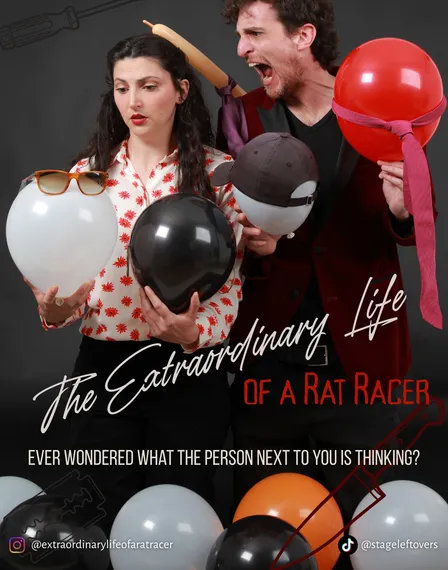
The Extraordinary Life of a Rat Racer – Bridge House Theatre, Penge – April 2026

The Extraordinary Life of a Rat Racer is a bold, fast-paced and deeply personal two-hander that offers an unflinching look at anxiety, intrusive thoughts and the often chaotic landscape of the mind. Currently in development ahead of its run at the Edinburgh Fringe, this is a piece very much still evolving, but one that already shows clear potential and a distinctive creative voice.

Written by Chiara Fumanti, who also performs as Eva, the show began life as a simple note – a “short story only written in incohesive anxiety-led thoughts throughout the day” – before gradually developing into a fully realised stage piece. That origin is still very much embedded in the DNA of the work. The structure feels intentionally fragmented at times, mirroring the experience of intrusive thinking, and giving the piece an immediacy that feels both raw and authentic.

At its core, the play explores the tension between our external lives and our internal worlds. Eva, an Italian immigrant navigating life in London, is accompanied – and often tormented – by Arthur (Andrea Guerini), a physical manifestation of her intrusive thoughts. Their relationship is deliberately toxic, with Arthur acting as both antagonist and distorted conscience: a kind of ringmaster of the mind, stirring action, applying pressure, and pushing Eva further towards the edge.

The subject matter is not easy. The writing leans into the visceral and the unsettling, with moments that are deliberately shocking in their imagery. Yet what sits beneath this is something more introspective: a desire to understand identity, to question where our thoughts come from, and to explore the idea that the mind itself can feel like a battleground. As Fumanti describes it, the audience is not simply watching events unfold, but witnessing “civil war” within the protagonist’s psyche.

There is something particularly compelling about seeing a piece at this stage of its life. As it stands, the production is high-energy and rarely lets up, moving at a relentless pace from the outset. While this creates intensity, there is a sense that it would benefit from greater variation –  moments of stillness, silence, and space for the text to breathe. The material is strong enough to sustain that kind of contrast, and allowing certain moments to land more fully would only enhance its impact.

The performances are committed and emotionally driven. Both Fumanti and Guerini bring a clear sense of ownership to the work, which is perhaps unsurprising given its autobiographical roots and the fact that the piece has been self-created, self-produced and developed within a very small team. That personal investment is evident throughout.

Guerini’s portrayal of Arthur is particularly striking in its physicality and unpredictability. There are shades here, whether intentional or not, of the anarchic, manic energy associated with characters like Drop Dead Fred. For those unfamiliar, the 1991 film starred Rik Mayall as an outrageous, imaginary friend who re-enters a woman’s adult life as a kind of chaotic alter ego – disruptive, inappropriate, and gleefully unfiltered, yet ultimately rooted in deeper emotional truth. Arthur carries a similar sense of unruly, intrusive presence: part tormentor, part darkly comic companion, blurring the line between external character and internal voice. It’s a performance style that teeters on the edge of chaos, and while at times it risks overwhelming the quieter emotional beats, it is undeniably memorable and gives the piece a distinctive tonal edge.

Staging is inventive, making strong use of minimal resources. Balloon “characters,” scattered across the stage and inscribed with words and faces, become a recurring visual motif, at once playful and unsettling. They are popped, handled, and interacted within ways that build tension and reflect Eva’s internal state. There are also moments of audience interaction that further blur the line between observer and participant, drawing the audience into Eva’s world in unexpected ways.

That said, clarity of delivery is something that could be further refined. At times, the pace of speech, combined with accents, makes certain lines harder to fully absorb. Slowing the rhythm in key moments would not only aid understanding, but also allow the emotional weight of the text to resonate more deeply.

What is perhaps most impressive is the intention behind the piece. This is not simply a depiction of anxiety for shock value; it is an attempt to reframe it. The closing sentiment underpinning the work – that we are not meant to “destroy” the darker parts of ourselves, but to find a way to live with them – is a thoughtful and quietly powerful one.

As it moves towards Edinburgh, The Extraordinary Life of a Rat Racer feels like a piece with a strong foundation and a clear sense of purpose. With further development, particularly in pacing, tonal variation and refinement of performance, it has the potential to become something genuinely impactful.

For now, it stands as an intriguing and promising work in progress: raw, inventive, and unafraid to explore difficult terrain.

UTS Rating:  🎭🎭🎭

The Extraordinary Life of a Rat Racer continues at The Bridge House Theatre, Penge until 25th April 2026.

2 High Street, Penge, SE20 8RZ

Tickets: £17 (pay more), £15 (standard), £13 (pay less)

https://www.ticketsource.co.uk/the-bridge-house-theatre/e-ovmpjj

It continues at Barons Court Theatre, West Kensington, London

30th June – 4th July 2026, 7.30pm

28a Comeragh Road
London W14 9HR

Tickets: £15 (£10 concessions)

https://www.baronscourttheatre.com/ratrace

#TheExtraordinaryLifeofARatRacer #TheatreReview #EdinburghFringe2026 #NewWriting #MentalHealthTheatre

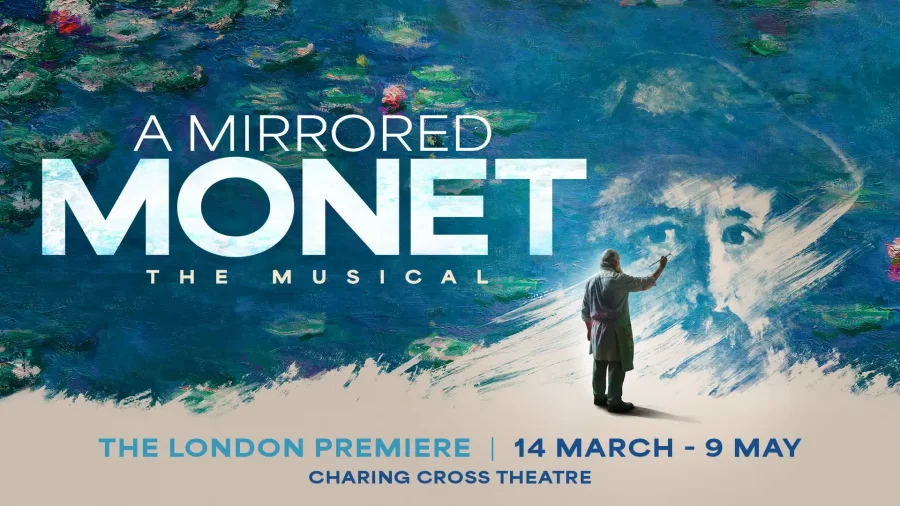
A Mirrored Monet @ Charing Cross Theatre – April 2026

A Mirrored Monet at Charing Cross Theatre is an immersive and visually striking piece that invites its audience not simply to observe, but to step inside the world of its subject. Drawing on the life and legacy of impressionist painter Claude Monet, the production blends music, movement and impressionistic design to create something that feels less like a traditional musical and more like a living canvas.

The concept is a compelling one. With a central playing space and fluid stage design (kudos to Libby Todd and Matt Powell) the audience is drawn into the action, moving through moments that feel cinematic in their use of light, colour and sound. Blues and soft washes of colour echo Monet’s own palette, while Jodie Underwood’s lighting design is also particularly striking, shifting between softness and intensity to mirror the emotional landscape of the piece. At times it captures something fleeting and painterly, resembling reflections on water; at others, it frames the characters in moments of quiet introspection. Combined, these elements create a world that feels both gentle and immersive; one that invites you in, and quietly holds you there, drawing you into Monet’s internal landscape as much as his external life.

At its heart, however, A Mirrored Monet is less concerned with biography than with something more universal: the cost of ambition and the question of what it means to truly succeed. Through its dual portrayal of Monet – both the older, reflective artist and his younger, searching self – the piece explores the tension between external recognition and internal truth. Camille, Monet’s first wife, emerges as the emotional centre of the story – not as a counterpart to ambition, but as its quiet cost. Through her, the production gives shape to what can be lost in a life devoted to art: love, stability, and the everyday human connection that exists beyond legacy. If Monet represents the enduring pull of creation, Camille represents what is left behind in its wake.

The performances across the board are of a very high standard. Jeff Shankley, as the older Monet, anchors the piece with a beautifully textured, gravelly speaking voice and a calm, reflective presence that draws the audience in. He brings a real warmth and authority to the role and, with a CV that includes originating Greaseball in Starlight Express and Munkustrap in Cats (how cool is that?!), it’s a genuine pleasure to see him here in a later-career role that feels so well suited to him.

In contrast, Dean John-Wilson’s younger Monet brings a more searching, emotional energy, capturing the artist at an earlier, more uncertain stage of his life. Surrounding him is a wonderfully drawn circle of fellow artists – Bazille, Renoir and their mentor, Manet –  creating a bohemian snapshot of the Impressionist movement in its formative years. There’s something particularly appealing about seeing that community brought to life on stage: a group of young creatives, bound together by ambition, friendship and a shared desire to break away from convention.

Aaron Pryce-Lewis, the Welsh powerhouse, as Manet, is a standout. With a commanding stage presence and a rich, resonant baritone, his performance adds both authority and warmth, and provides some of the musical highlights of the evening. Across the ensemble, the vocals are consistently strong, with a polished, high-quality feel throughout. Brooke Bazarian as Camille is particularly notable in this respect, her voice clear, expressive and beautifully controlled.

Carmel Owen’s score itself leans more towards atmosphere than melody. While it may not offer many immediately memorable or “catchy” numbers, it works effectively within the piece, supporting its reflective tone rather than competing with it. There are moments that echo the sensibility of Sondheim’s Sunday in the Park with George, an inevitable comparison, perhaps, given the subject matter, and while this production doesn’t aim for the same musical impact, it shares a similar interest in art, legacy and the inner life of the artist.

There is, perhaps, a slight sense of the piece lingering a little too long in places, with some musical numbers and passages extending beyond their natural peak. However, this never significantly detracts from the overall experience, which remains cohesive and thoughtfully realised.

Ultimately, A Mirrored Monet is a reflective, quietly moving exploration of art, memory and identity. It delivers its impact not necessarily through spectacle or immediacy, but rather through atmosphere, nuance and the questions it leaves behind.

UTS Rating:  🎭🎭🎭🎭

A Mirrored Monet continues its run at Charing Cross Theatre until 9th May 2026 with tickets available here: Charing Cross Theatre

#amirroredmonet #charingcrosstheatre #offwestend #newmusical #claudemonet

Welcome to Pemfort @ Soho Theatre, London – April 2026

Welcome to Pemfort is a new play running in one act at approximately 90 minutes, and every bit as intriguing and unusual as its title suggests. Set entirely in the gift shop of a struggling countryside castle (or fort, if you prefer 😉), it explores themes of rehabilitation, community, honesty and personal history through its four characters: Glenn, Ria, Kurtis and Uma.

As the staff prepare for their first “Living History” event, which is sure to be a truly momentous occasion, the arrival of a new team member, Kurtis, subtly unsettles the dynamic. It soon becomes clear that he is attempting to reintegrate into society following a prison sentence, setting the tone for a story that is as thoughtful as it is quietly compelling.

There’s an almost tranquil quality to the production at times; a sense of calm, routine and gentle humour, but this is laced with an underlying tension that never quite disappears. Ed Madden’s intelligent direction ensures the atmosphere feels peaceful on the surface, yet something is always bubbling just beneath it. This is beautifully supported by Alys Whitehead’s design: a detailed, carefully observed set that feels entirely authentic, as though lifted directly from a real countryside gift shop.

Max Pappenheim’s use of sound and music is also particularly effective in reinforcing the mood. Subtle transitional moments, rather than full scene changes, gently mark the passage of time, accompanied by music that enhances the sense of stillness and reflection. Layered with the ambient sounds of the countryside – birdsong drifting in from outside the shop – it creates a world that feels both grounded and quietly immersive. Kurtis’ arrival introduces a subtle shift; he feels, at least initially, like an interloper in an established, comfortable world.

The performances across the board are excellent. Ali Hadji-Heshmati’s Glenn is a particularly striking presence; the portrayal is incredibly precise and deeply observed, capturing a character who experiences the world in a distinctly different way to others, without ever feeling overstated. Debra Gillett’s shop manager Uma brings warmth, kindness and a slightly new-age sensibility to the piece, a steady, reassuring presence who holds the group together. Ria, who becomes central to the unfolding story, is played by Lydia Larson with a natural ease and openness that makes her both relatable and emotionally engaging.

Sean Delaney as Kurtis, however, is the standout. Quiet, withdrawn and initially unsure of himself, he gradually reveals a depth of character that is both compelling and deeply sympathetic. As his story unfolds, the audience is drawn into his experience – his shame, his remorse, and his attempt to rebuild himself. A key monologue, delivered with remarkable control, is one of the most powerful moments in the play. There is no overplaying; just a careful, honest build that lands with real emotional force. When his voice finally cracks, it is genuinely heartbreaking, and the room feels completely still.

Sarah Power’s writing itself is hugely impressive. There is a quiet confidence to it, a willingness to let moments breathe, to allow characters and relationships to unfold naturally without forcing resolution. The dialogue feels authentic and uncontrived, and the dilemmas faced by the characters are drawn with a striking sense of realism and proximity. Running alongside the central narrative is a subtle but effective metaphor involving a deer; a creature in need of help, but difficult to approach. It’s a clever addition by Power and a gentle, almost symbolic thread that mirrors the play’s wider themes: the desire to help, the instinct to hold back, and the limits of what we feel able to accept or overcome. It’s handled with a light touch but adds a layer of quiet poignancy to the piece.

At its core, this is a play about honesty, about the courage it takes to tell the truth, and the consequences that truth can carry. As the relationships between the four characters evolve, the piece begins to pose a series of quietly challenging questions. Can a person ever truly be reformed? How far are we willing to go in offering forgiveness? And what happens when our principles come into conflict with our personal happiness?

These questions are never resolved easily. Instead, the play allows the tension to sit and deepen, inviting the audience to engage with the moral complexity of the situation. There is no neat resolution here and that feels entirely intentional.

Without giving too much away, the final stages of the play take an unexpected and deeply affecting turn. What might resolve simply instead becomes something far more complicated and far more honest.

This is a slow-burn production, but one that rewards patience. Thoughtful, well-directed and beautifully performed, it’s a piece that lingers, not because of spectacle, but because of the questions it leaves behind.

UTS Rating:  🎭🎭🎭🎭

Welcome to Pemfort continues at the Soho Theatre until Saturday 18th April with a few tickets left here: Welcome to Pemfort – Soho Theatre


I Was a Teenage She-Devil @ The Other Palace Studio, London – April 2026

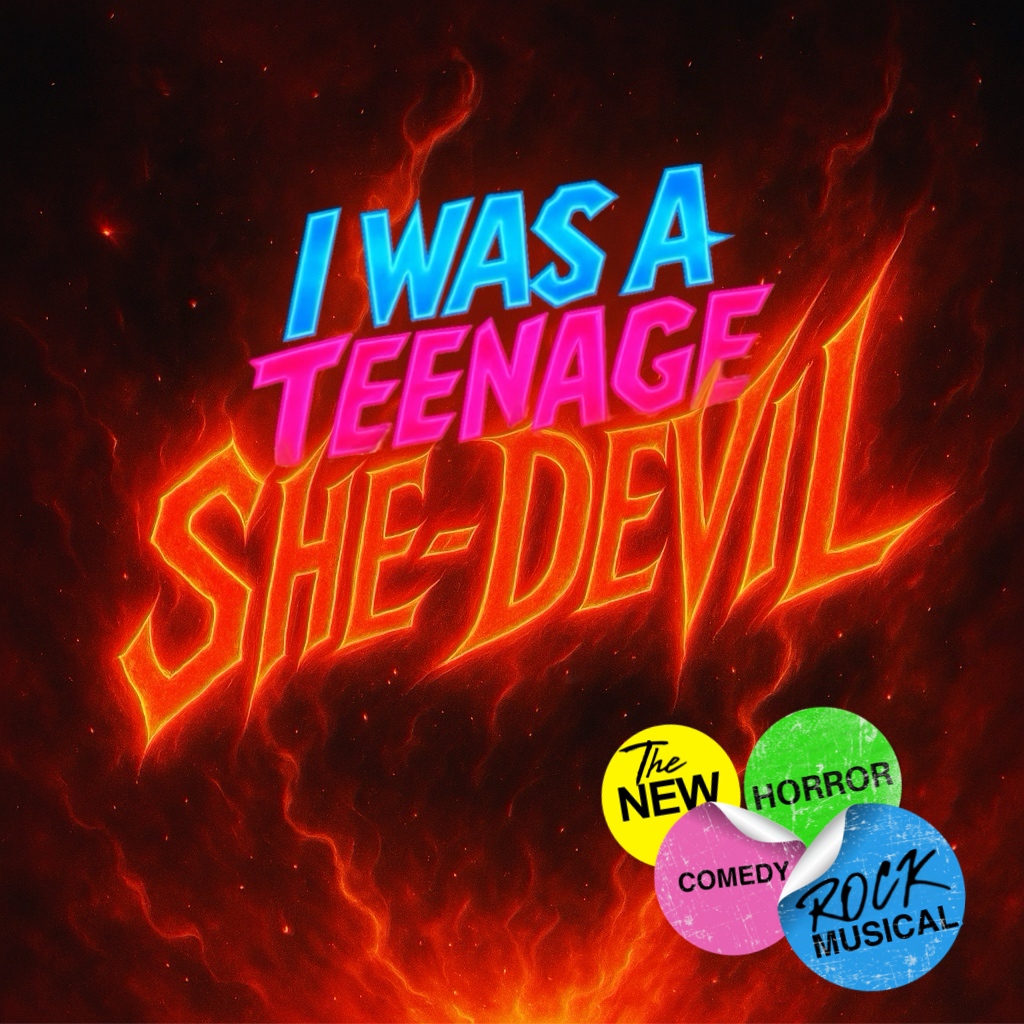
I Was A Teenage She-Devil is a slice of full-throttle, neon-drenched insanity, in the best possible way.

The show began life at the Edinburgh Fringe, and you can feel that DNA running right through it. This is a show built for late-night crowds, cult energy and word-of-mouth buzz; now it’s made the leap to London at The Other Palace’s intimate studio, bringing its glitter, guitars and glorious chaos with it. Written entirely by Sean Matthew Whiteford, it has a clear, confident voice and a strong sense of exactly the world it wants to create.

At the show’s heart is a classic (and knowingly bonkers) story: Nancy must quite literally sell her soul, journey to hell and back, through that chaos discover who she really is and, of course, find true love at the end of it all. It’s big, bold storytelling, delivered with a tongue in cheek wink and a lot of volume.

From the moment it starts, the energy is sky-high and stays there. No slow build, no gentle introduction,  just straight into a riot of sound, colour and attitude. Neon pink, glitter, leather, studs… it’s all here, with playful nods to 1980s music and film culture woven throughout, including a cheeky Back to the Future quote and a tribute to icon Sam Fox through song.

Vocally, it’s seriously strong. Big, high-octane voices across the cast, with numbers that feel closer to a live gig than traditional musical theatre. There’s  confidence to it, as though everyone on stage knows exactly the show they’re in and is having a great time delivering it.

🔥Standouts?
Jordan Fox’s Big Rod is a scene-stealer – funny, charismatic and just the right side of ridiculous, with mesmerising denim shorts that deserve their own billing (and postcode, to be honest 😉). Think somewhere between Disney’s Gaston and a Bill & Ted character dropped into a rock musical. Aoife Haakenson’s Nancy is engaging and grounded (the pink neon recorder is a beautiful touch!), giving the show a strong, likeable centre and a performance that holds its own amid all the chaos. And then there’s Satan, brilliantly played by Sean Arkless, who is right up there with the best. His seamless shift from awkward library weirdo to leather-studded rock devil is a standout transformation and one of the show’s most entertaining arcs.

Chaos really is the order of the day. Confetti flying. Satan making an entrance. Glitter everywhere. A metal-infused god-like moment. Possession. Synths. Big hair energy. It comes at you in waves, a kind of joyful, controlled madness that feels very true to its Fringe roots.

There are glimpses of something deeper underneath – identity, belonging, a touch of darkness – but they’re lightly sketched rather than fully explored. You do get the sense there’s room for this to grow into something even bigger and sharper if it wanted to lean further into those themes.

At 80 minutes, it’s tight, punchy and slick. Hugely entertaining, brilliantly performed, and clearly very well rehearsed. Whether it evolves beyond this or stays exactly as it is, it already succeeds at what it sets out to do: deliver a fun, high-energy, slightly unhinged night of theatre.

⭐ UTS rating: 🎭🎭🎭🎭
I Was A Teenage She-Devil continues at The Other Palace Studio until 26th April with tickets available here: I Was a Teenage She-Devil – The Other Palace Theatre

Under the Stars Interview – From Fringe to London: I Was A Teenage She-Devil

Some shows arrive fully formed. Others explode onto the scene in a blaze of glitter, guitars and chaos and then grow into something bigger, louder and sharper. I Was A Teenage She-Devil definitely appears to belong in the second category.

The 80s horror rock musical first appeared at the Edinburgh Fringe before transferring to London. It starts previews tonight at The Other Palace, and it’s already building the kind of cult buzz that new musicals dream of. Behind it are producers Claire Feuille and Josh Dooley of Feuille Dooley Productions, who have worked across everything from Fringe theatre to Broadway and were also involved with the journey of the amazing Operation Mincemeat from West End to Broadway.

Fittingly, their first reaction to She-Devil was not a careful business decision. It was the music. They told me that when they first heard the score, they thought someone had discovered a lost mixtape of previously unheard hits by every 80s legend imaginable. They were hooked immediately.

From Fringe Chaos to London Glow-Up

Moving from Edinburgh Fringe to an Off West End run isn’t just a venue change, it’s an evolution. The new London production includes edits to the book, new material including a brand new song, and a full creative upgrade with set design, lighting and sound transforming the space into a complete world rather than a Fringe black box.

But what’s interesting is that these producers clearly love the Fringe process. They described Fringe as being on “a different planet” compared to London and New York. At Fringe, there’s nowhere to hide behind production value. The work has to stand on its own, and everyone on the team ends up doing everything from logistics to quick changes to laundry.

London, though, is where they prefer to develop new musicals long term, largely because of audiences. They said London audiences are far more open to the messiness of new work in development and are constructive in their responses, whereas New York audiences can be much less forgiving during the process phase. That alone probably explains why so many new musicals now choose London as a development home.

80s Horror Rock, Identity and Heart

On the surface, I Was A Teenage She-Devil sounds like pure camp chaos: 80s horror rock musical, big energy, big hair, big guitars.

But underneath, the show also explores identity and finding your true self, particularly through a queer lens. The producers talked about how the 80s were incredibly queer in fashion, music and culture, yet mainstream films rarely openly celebrated queer characters or stories. This show aims to do exactly that, combining comedy, horror and a genuinely heartfelt core.

It’s that combination of ridiculous fun and real emotion that often creates cult musicals.

What Producers Actually Do (Apparently Everything!)

I asked, for those who may not know,  what producers actually do, and the answer was one of my favourite parts of the interview.

Josh said that early in his career he asked a big producer what a producer actually does, and the answer he got was simply:

“Producers produce.”

He didn’t understand it at the time, but now he says the job is basically to produce whatever is needed. Need money, people, a venue, a solution to a problem, a new plan, a miracle? That’s the producer’s job. He joked that the mob would probably call them “fixers.”

In reality, producing a new musical involves choosing the show, planning its development path, building the creative team, finding the right venues, managing marketing and audience development, listening to audience feedback and, of course, raising money. Constantly.

Lessons from Operation Mincemeat

Through their work on the West End to Broadway transition of Operation Mincemeat, Claire and Josh saw first hand how a show can grow from Fringe beginnings to global success. One of the biggest lessons they took from that production was the importance of audience community and not jumping too quickly into bigger venues. Gradually increasing theatre size allows a fanbase to grow and keeps shows financially sustainable.

It’s a fascinating reminder that theatre success isn’t just about the show itself. It’s about strategy, audience relationships and long-term development.

Building an Audience Before Opening Night

Another really interesting point was about the concept album being released before the London run. The producers believe new musicals shouldn’t be overly protective of their material anymore because audiences now have endless entertainment choices competing for attention every minute of the day.

Instead, releasing music early helps build a relationship with audiences before they even step into the theatre. Theatre isn’t just about one night out. It’s about building fans who come back again and again.

Advice for New Musical Writers

Claire and Josh’s advice for writers and theatre makers developing new musicals was surprisingly honest.

Josh said that he once chased stability outside the arts and found neither stability nor happiness, so returned to theatre because if you’re going to struggle financially, you might as well enjoy what you’re doing! Fair play!

Claire said the most important thing is finding the right collaborators and sticking with them, because developing a new musical is a long journey and you need a team who believe in each other.

Both pieces of advice felt very real and very theatre.

What’s Next for She-Devil

The big dream for the future of I Was A Teenage She-Devil is simple: a bigger space, bigger budget and a live band on stage. The show is essentially a rock concert in musical form, and Josh and Claire clearly can’t wait to fully realise that scale.

Meanwhile, they’re heading back to New York and Edinburgh Fringe with new plays and will be returning to London again later in the year with more work. So they are definitely producers to keep an eye on – watch this space!

What I loved about speaking to Claire and Josh is that they clearly love the messy, chaotic, unpredictable process of making new theatre. And that’s exactly where the most exciting shows come from.

I Was A Teenage She-Devil feels like one of those shows that could have a very interesting journey ahead of it.

And honestly, any musical described as an 80s horror rock musical with a heart already sounds like a very good night out to me. I truly can’t wait to see it on Wednesday!

I Was A Teenage She-Devil begins previews at The Other Palace Studio TONIGHT! It opens on 8th April and runs until 26th April. Don’t miss it –  book your tickets here: I Was a Teenage She-Devil – The Other Palace Theatre

#IWasATeenageSheDevil
#LondonTheatre
#OffWestEnd
#NewMusical
#TheOtherPalace  

Powered by WordPress & Theme by Anders Norén