

Month: May 2026

An Ideal Husband @ Lyric Hammersmith – May 2026

Oscar Wilde’s An Ideal Husband has always been a play obsessed with image: public morality, private compromise and the performance of respectability. Director Nicholai La Barrie’s bold new production at the Lyric Hammersmith attempts to drag those themes firmly into the present day through an all-Black cast, contemporary music, stylised movement and a visually striking modern aesthetic. The result is certainly ambitious, often entertaining and undeniably original, even if it does not always fully cohere dramatically.

From the moment audiences enter the auditorium, the production announces its intentions loudly and confidently. Contemporary R&B and neo-soul pulse through the theatre before the curtain rises, cocktails are themed around power and scandal, and the production’s visual world immediately rejects any notion of dusty heritage theatre. Instead, this is Wilde reframed through glamour, politics, celebrity culture and modern public performance.

Visually, the production is often stunning. The costumes are magnificent throughout, blending sharp tailoring with contemporary luxury and high-fashion flair. Jamael Westman’s Lord Goring in particular looks effortlessly stylish every time he steps on stage, perfectly embodying the character’s languid charm and social ease. The set design remains relatively minimal, but the lighting, choreography and physical theatre elements constantly reshape the stage around it, giving the evening a fluid, kinetic energy. At several points, movement is used extremely effectively, whether through stylised transitions, heightened ensemble work or moments where characters physically orbit one another like figures trapped within a glamorous political machine. There are also some genuinely inspired uses of music throughout, from modern Black music and dance influences to the inclusion of tracks such as Miss Dynamite, all helping to create a vibrant contemporary atmosphere that feels worlds away from traditional Wilde productions.

And yet Wilde remains stubborn material. However modern the framing, An Ideal Husband still lives or dies on precision: timing, chemistry, wit and absolute confidence with language. Too often here, the acting lacks the sharpness needed to make Wilde’s dialogue truly sparkle.

Aurora Perrineau’s Mrs Cheveley occasionally hints at the steel and sophistication the role demands, and visually she certainly fits the production’s sleek aesthetic. However, the performance never quite acquires the commanding gravitas or seductive menace needed to make the character truly formidable, leaving some of the play’s central stakes feeling less dangerous than they should. Elsewhere, several performances veer too heavily into caricature, with comedy frequently overplayed rather than allowed to emerge naturally from Wilde’s razor-sharp dialogue.

It is Jamael Westman, best known to many audiences for previously starring as Hamilton in the West End production of Hamilton, who most successfully understands the rhythms of Wilde. His Lord Goring is charismatic, relaxed and genuinely funny without ever appearing to chase laughs too aggressively. Westman instinctively trusts the text, allowing Wilde’s wit to land naturally rather than forcing it. His scenes with Mabel Chiltern, played with warmth and charm by Tiwa Lade, are easily the production’s strongest. Together they generate the chemistry, playfulness and emotional ease that much of the evening elsewhere struggles to sustain.

Chike Okonkwo also brings welcome grounding and sincerity to Sir Robert Chiltern, helping anchor some of the production’s more emotionally serious moments amidst the surrounding theatrical excess.

Interestingly, the second half proves considerably stronger than the first. Once the production finally relaxes into its own absurdity and embraces the heightened theatricality more confidently, it becomes significantly more entertaining. Certain visual moments linger impressively in the memory, particularly the wedding sequence and bursts of red confetti that transform the stage into something resembling a glamorous political fever dream. There are flashes throughout of the daring, contemporary Wilde revival this production could perhaps have become more consistently.

What ultimately prevents the evening from fully succeeding is not the concept itself, but the uneven execution. The production clearly understands Wilde intellectually, and its desire to widen access to classic theatre while reframing the play through a contemporary lens is admirable. Judging by audience reaction, many viewers were clearly having a wonderful time, particularly those perhaps newer to Wilde’s work. That accessibility and inclusivity can only be a positive thing for modern theatre.

However, the production too often mistakes noise, movement and stylisation for genuine dramatic depth. Wilde’s satire needs precision beneath the spectacle, and here the balance does not always hold.

Still, for all its flaws, this remains a genuinely interesting revival rather than a forgettable one. It may not fully succeed, but its ambition, visual flair and willingness to take risks are difficult to dismiss. In a theatrical landscape often dominated by safe revivals, there is at least something refreshing about a production prepared to fail boldly rather than succeed conventionally.

UTS Rating: 🎭🎭🎭

#AnIdealHusband #LyricHammersmith #OscarWilde #TheatreReview #LondonTheatre
Flyby @ Southwark Playhouse, Borough – May 2026

There’s something fitting about returning to reviewing with a musical called Flyby. After a pause, relaunches can feel a little like re-entry: exciting, slightly disorientating and fuelled by equal parts anticipation and nerves. It also felt entirely right that this return happened at one of my favourite London venues, the wonderfully atmospheric Southwark Playhouse.

There’s always a particular electricity to a final matinee too. Audiences arrive knowing this exact version of the show is about to disappear forever, while casts often perform with that unique mixture of freedom, exhaustion and emotional openness that only comes at the end of a run.

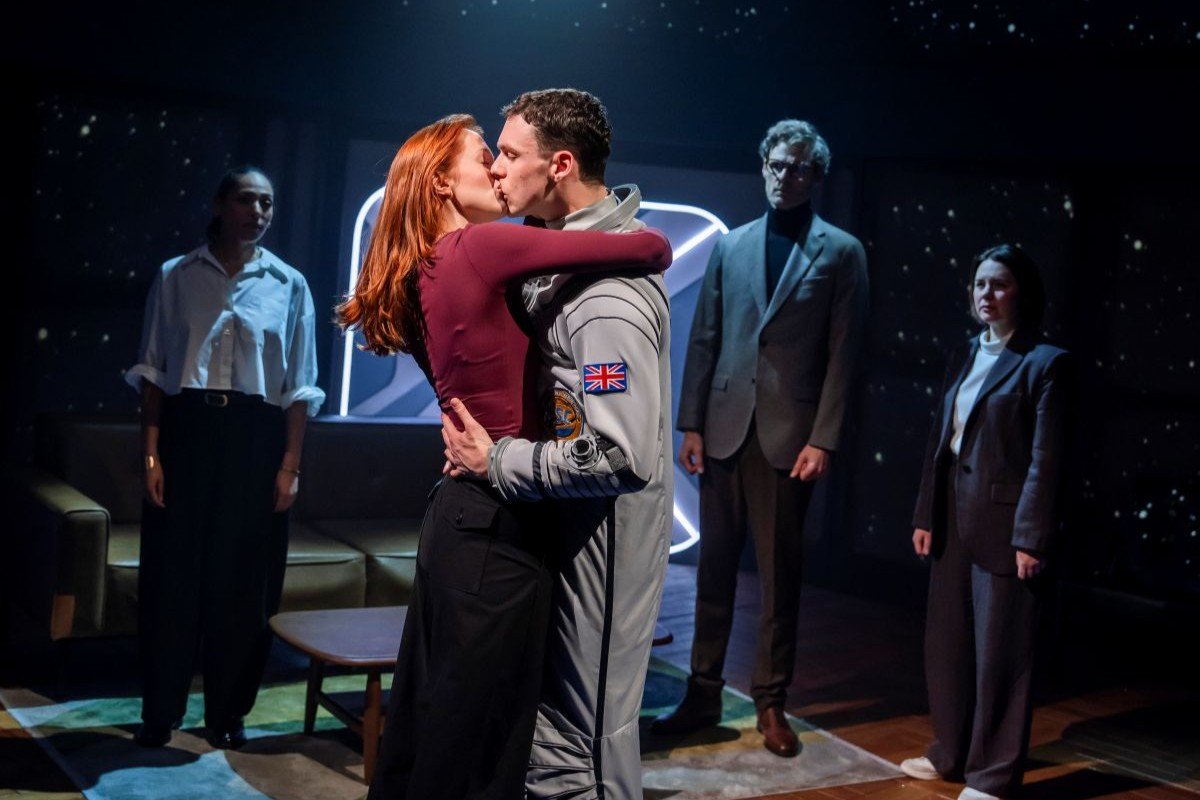
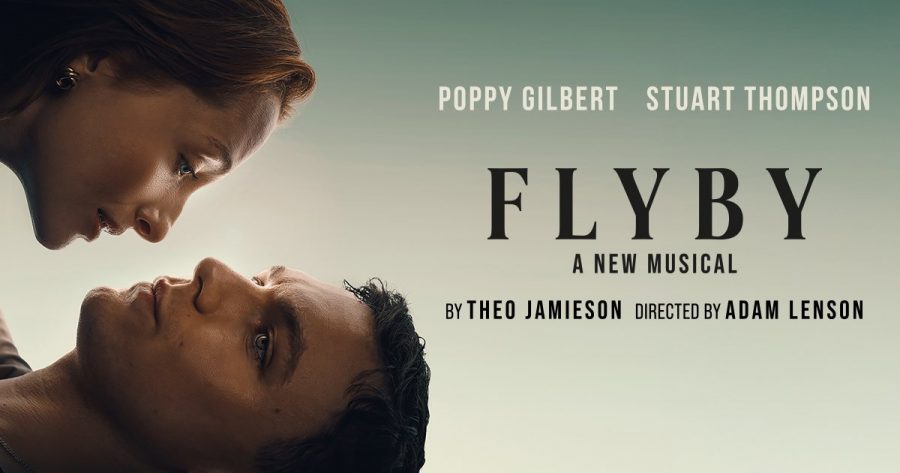
Created by Theo Jamieson and Adam Lenson and developed at the National Theatre, Flyby arrives with considerable ambition. Part psychological drama, part fractured love story and part retro-futurist sci-fi fever dream, it follows astronaut and engineer Daniel and filmmaker Emily through a relationship shaped by memory, trauma, longing and emotional distance.

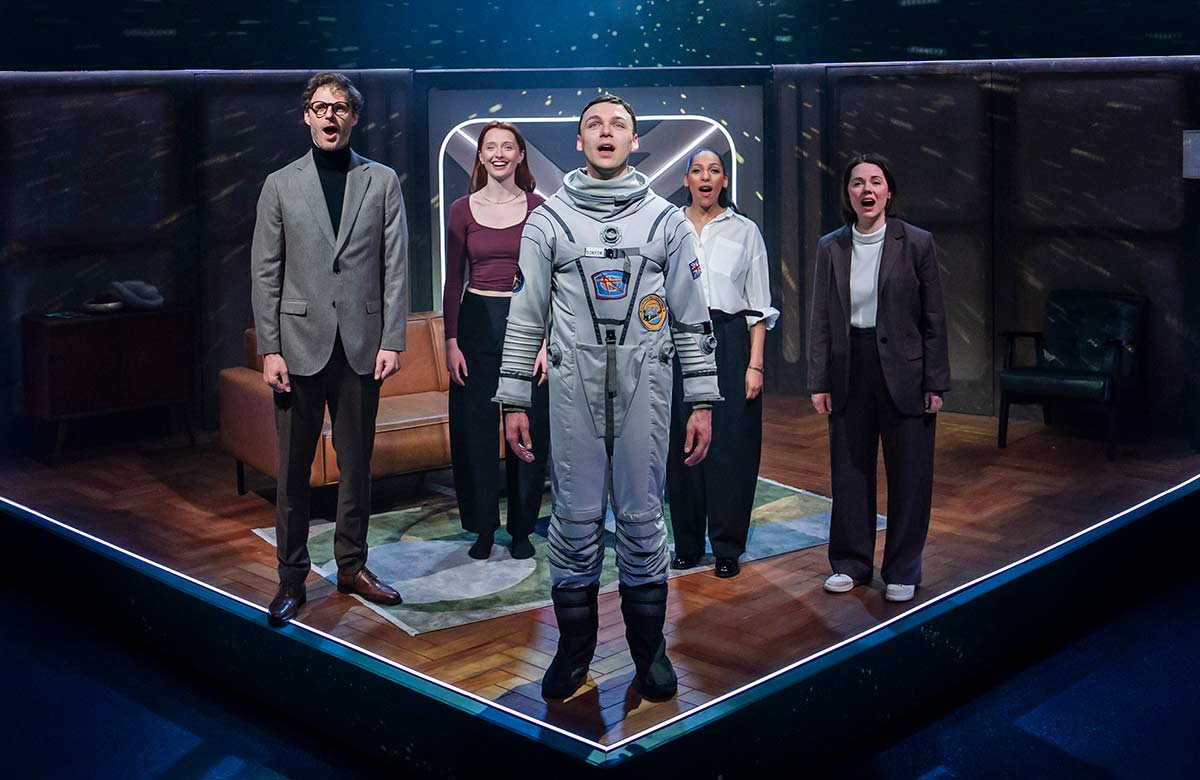
The narrative unfolds in a deliberately fragmented and non-linear way, weaving together memories, interviews, imagined sequences and moments of emotional confrontation. Three narrators orbit around the central story, helping to blur the boundaries between documentary, memory and psychological interiority. At times the show feels almost less interested in literal plot than in recreating the sensation of drifting through somebody else’s emotional landscape.

Before the show even began, Southwark Playhouse’s Large had already been transformed into its world. The auditorium hummed with retro electronic chatter and R2-D2-esque spaceship noises, creating an immediate sense of immersion. The audience itself was not completely packed for this final matinee, but the house still felt warm, lively and genuinely engaged.

Visually, the production is striking. Libby Todd’s set design places a mid-century style living room inside a glowing cube-like structure which feels simultaneously domestic, clinical and cosmic. The musicians positioned in upper windows, above the action and behind the stars, become part of the visual language too, almost like observers overlooking the characters or the emotional machinery of the ship itself. In Southwark’s relatively intimate space, the production manages to feel surprisingly expansive.

And in many ways, Flyby is at its strongest when it fully embraces its sci-fi atmosphere. The imagery of space, isolation and drifting emotional disconnection is often genuinely haunting. The production creates an evocative emotional texture that lingers long after the performance finishes.

At the centre of this is Stuart Thompson’s deeply committed performance as Daniel. Thompson gives the character an openness and emotional fragility that anchors much of the show, particularly during his solo material. There is something painfully exposed about Daniel throughout, a man carrying unresolved trauma, loneliness and a desperate longing for connection. Even when the narrative itself occasionally drifts, Thompson remains compelling to watch.

Poppy Gilbert’s Emily is more difficult to connect with, although this feels more a question of writing than performance. The central relationship is intentionally messy and volatile, but I found myself far more emotionally invested in Daniel’s internal journey than in the romance itself. Interestingly, the show’s metaphorical exploration of space and emotional isolation often proves more engaging than the actual relationship drama at its core.

That imbalance becomes increasingly apparent as the piece progresses. Flyby is rich in symbolism and atmosphere, but not all of its imagery fully lands or remains clearly anchored. The turtle motif, initially introduced through childhood memory, has clearly divided opinion, but I actually found it surprisingly effective. What could easily have tipped into something distracting instead became oddly touching and visually memorable. The turtle seems to carry multiple possible meanings throughout the piece: safety, retreat, emotional self-protection and the idea of carrying ‘home’ with you even while drifting through isolation. There is also something quietly resonant in the image of a creature instinctively navigating vast oceans, mirroring Daniel’s own search for guidance and connection across emotional and literal distance. It struck me as the kind of theatrical device that could become even more powerful on a larger stage with greater visual scale behind it.

The show repeatedly gestures towards ideas of navigation, home and guidance, particularly through its lighthouse imagery, but these themes sometimes feel more poetically suggested than fully embedded within the storytelling. This is perhaps where my feelings about the production became most mixed.

There is no question that Flyby is ambitious, intelligent and visually imaginative. Adam Lenson’s programme note explicitly states that the show is not interested in neatness or tidy emotional resolutions, and that intention is absolutely visible on stage. However, there were points where the fragmented structure and dreamlike ambiguity began to work against the production’s emotional momentum.

At one hour and forty-five minutes without an interval, the show occasionally starts to feel adrift. Certain scenes and emotional beats repeat without significantly deepening the central relationships, and there were moments where my attention began to wander despite the audience around me remaining visibly absorbed. The material arguably needs either tightening or a full two-act structure to better sustain its emotional trajectory.

Even so, there is something admirable about a musical willing to take these kinds of risks. In an era where so much theatre can feel carefully focus-grouped into submission, Flyby reaches unapologetically for something stranger, more poetic and more emotionally elusive.

I left Southwark Playhouse unsure I fully loved the show, but equally unable to stop thinking about it afterwards. Its imagery, performances and atmosphere continued to circle in my head long after the final moments.

Like space itself, Flyby can sometimes feel vast, beautiful, lonely and difficult to fully grasp. But perhaps that lingering ambiguity is partly the point.

UTS Rating: 🎭🎭🎭

#FlybyMusical #SouthwarkPlayhouse #LondonTheatre #newmusicals #offwestend

Please Please Me @ Kiln Theatre – May 2026

Please follow @underthestars_bygirloutside

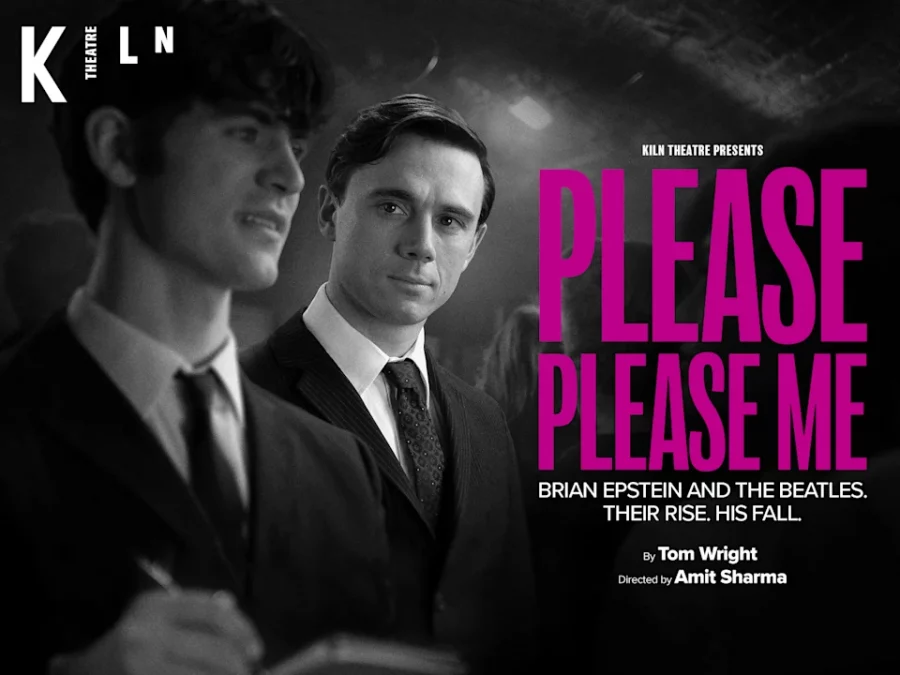
At first glance, Please Please Me at the Kiln Theatre might sound like another Beatles nostalgia piece, a trip through Liverpool accents, mop tops and wall-to-wall hits. Instead, playwright Tom Wright delivers something far more intimate and psychologically impressionistic: a study of Brian Epstein, the “Fifth Beatle”, and the hidden loneliness behind one of the greatest cultural revolutions in modern history.

For those less familiar with Epstein’s story, his importance to The Beatles is difficult to overstate. A young Jewish businessman from Liverpool, Epstein managed the family record store empire, NEMS, within a respectable and tightly controlled family world before discovering the Beatles at the Cavern Club in 1961. At the time, they were a rough-edged local band shaped by the chaos of Hamburg clubs and Liverpool nightlife. Epstein saw something extraordinary in them. He refined their image, introduced the famous suits and synchronised bows, secured crucial recording opportunities and helped transform four working-class Liverpool musicians into polished global icons. In many ways, he helped invent the blueprint for modern pop stardom itself.

Yet while Epstein became enormously successful professionally, his personal life was far more complicated. Homosexuality remained illegal in Britain throughout much of his lifetime, and Wright’s play repeatedly returns to the shame, secrecy and emotional isolation shaping Epstein’s inner world. Here was a man helping usher Britain into a new age of freedom and cultural liberation while remaining trapped behind carefully maintained facades himself. The production repeatedly hints at the tension between the respectable Epstein family environment and the hidden private life Brian was forced to navigate beneath it.

Even before the curtain rose, the production’s intent was quietly signposted through a haunting pre-show soundtrack of wistful crooner ballads including When You Lose The One You Love by David Whitfield and I’ll Always Be in Love with You and Skylark by Michael Holliday. These songs of longing, emotional restraint and unreachable devotion create the atmosphere of a Britain just before the Beatles exploded everything open: a world of coded emotions, polished surfaces and hidden lives. The playlist feels less like nostalgia and more like Brian Epstein’s private emotional soundtrack.

Wright’s programme notes make clear that this is not intended as strict historical recreation. He writes of emotional truth, memory and the unknowability of what may or may not have passed between Epstein and John Lennon during their infamous trip to Torremolinos in 1963, noting that theatre thrives in spaces where certainty breaks down. That tension between ambiguity and interpretation sits at the heart of the production.

The first half charts Epstein’s extraordinary rise with real energy. We see the ambitious young man who transformed the Beatles from rough-edged Liverpool club act into polished global phenomenon, imposing suits, discipline and refinement while simultaneously helping unleash a seismic cultural shift. The Cavern Club atmosphere is vividly evoked, and the production captures that intoxicating sense of Britain standing on the brink of reinvention. This is the story of the hidden architect of modern pop culture, a man shaping not only a band but the very idea of modern celebrity.

Interestingly, the Beatles themselves hover over the production more like ghosts than fully realised characters. Paul McCartney, George Harrison and Ringo Starr barely register directly at all, their absence becoming oddly haunting. Rather than recreating Beatlemania literally, Wright allows the band to exist as a looming cultural presence just outside the room, refracted through Brian’s memories, anxieties and desires. It is an unexpectedly effective choice, transforming the Beatles from flesh-and-blood icons into something almost mythic.

Then comes the unravelling.

The second half becomes increasingly hallucinatory and fragmented as Epstein spirals through drink, drugs, paid encounters and emotional collapse. Wright’s play leans hard into psychological impressionism here, less interested in documenting facts than inhabiting the inner chaos of a man who helped create cultural immortality while quietly disappearing inside it. The play becomes less a Beatles biography than a chamber piece about intimacy, repression and mythmaking.

At the centre is a uniformly excellent performance from Calam Lynch, known to many from the second season of Bridgerton, as Epstein. Lynch charts the character’s trajectory beautifully, moving from driven architect of Beatlemania to emotionally unravelled figure with both glamour and vulnerability intact. There is something of a young Rufus Wainwright in his appearance and energy, particularly during Act Two: intelligent, melancholic, slightly unkempt but elegant and faintly haunted. Lynch ensures Brian never becomes merely tragic martyr or historical footnote. Instead, he emerges as painfully human: ambitious, lonely, ashamed, romantic and increasingly fragile beneath the polish.

Opposite him, Noah Ritter makes a strong professional stage debut as Lennon, particularly impressive in capturing the voice and accent. However, the production’s portrayal of Lennon is perhaps its most contentious element. Here he is frequently harsh, arrogant, emotionally withholding and controlling, with relatively little warmth visible beneath the charisma. The play heavily implies Lennon as the emotional instigator and seductive destabilising force within the relationship.

More strikingly still, the production often gives the impression that Brian becomes less a genuine emotional equal than an experience for Lennon to try on before fame, marriage and fatherhood fully take hold. That imbalance hangs heavily over the play’s central relationship. Brian appears emotionally exposed and deeply invested, while Lennon frequently feels transient, exploratory and already moving toward another life entirely.

That dramatic choice creates compelling theatre but occasionally sits uneasily beside Wright’s own stated fascination with uncertainty and unknowability. Historically, the Lennon/Epstein relationship remains unresolved and contradictory, shaped as much by projection, loneliness and mythmaking as by any known facts. The play is most compelling when it allows that ambiguity to breathe rather than steering too firmly toward emotional certainty.

Still, the emotional force of the production remains undeniable, particularly in the way silence and withdrawal are used. Following the overt intimacy of the Spain scenes, Lennon’s sudden distance and emotional retreat become devastating in themselves. The man capable of managing global hysteria is reduced to anxiety over unanswered calls and vanished affection. The loneliness behind Beatlemania is rendered painfully clear.

Surrounding the central performances is a superb supporting ensemble. William Robinson, Arthur Wilson and Eleanor Worthington-Cox move seamlessly between multiple characters, creating fluidity and pace throughout. Their transformations are quick, convincing and often remarkably economical.

Worthington-Cox is especially affecting as Cilla Black, who opens and closes the play and emerges as one of its most emotionally grounded presences. Amid the speculation, obsession and emotional projection surrounding Lennon, Cilla feels refreshingly tangible and real: a loyal friend, a reminder of Liverpool roots and genuine connection. Her brief moments of singing are genuinely beautiful and quietly steal the evening.

Visually, Tom Piper’s simple but highly effective set works wonderfully within the intimate Kiln space. A huge illuminated NEMS sign looms over sparse staging and ghostly white drapes, suggesting glamour suspended above emotional emptiness. The fluidity of the design allows scenes to move rapidly through time and place without ever feeling cluttered.

Meanwhile, Amit Sharma’s slick, thoughtful direction keeps the production moving briskly across shifting decades, locations and emotional states. Despite the play’s abstract tendencies, Sharma ensures clarity and momentum rarely falter.

Ultimately, Please Please Me is less interested in Beatlemania itself than in the cost of creating it. Wright’s play asks what it cost Brian Epstein to help build a cultural revolution while remaining unable to fully inhabit his own identity. It may occasionally overstate its interpretation of Lennon and Epstein’s relationship, but it remains a compelling, stylish and deeply thoughtful piece of theatre that lingers long after the final scene fades into darkness.

UTS Rating: 🎭🎭🎭

#pleasepleaseme #thebeatles #kilntheatre #johnlennon #brianepstein #cillablack

Kiss of the Spider Woman @ Bristol Old Vic Theatre – April 2026

I returned to Kander and Ebb’s Kiss of the Spider Woman more than 30 years after first seeing it, this time at Bristol Old Vic, as part of its current revival and regional tour. My first encounter with the show was as a teenager at London’s Shaftesbury Theatre in December 1992. That lavish production starred Chita Rivera, Brent Carver and Anthony Crivello and sadly did not run for long, but left a lasting impression with me. I went into this brand new, reimagined production expecting nostalgia. What I did not expect was to be completely undone.

From the opening, eerie bars, underscored by the cold sounds of the prison, I was hooked. There is something about this score that gets under your skin immediately, and for me it remains one of the most extraordinary musical theatre scores ever written. I love Kander and Ebb and all that they have done, but this feels like something else entirely.

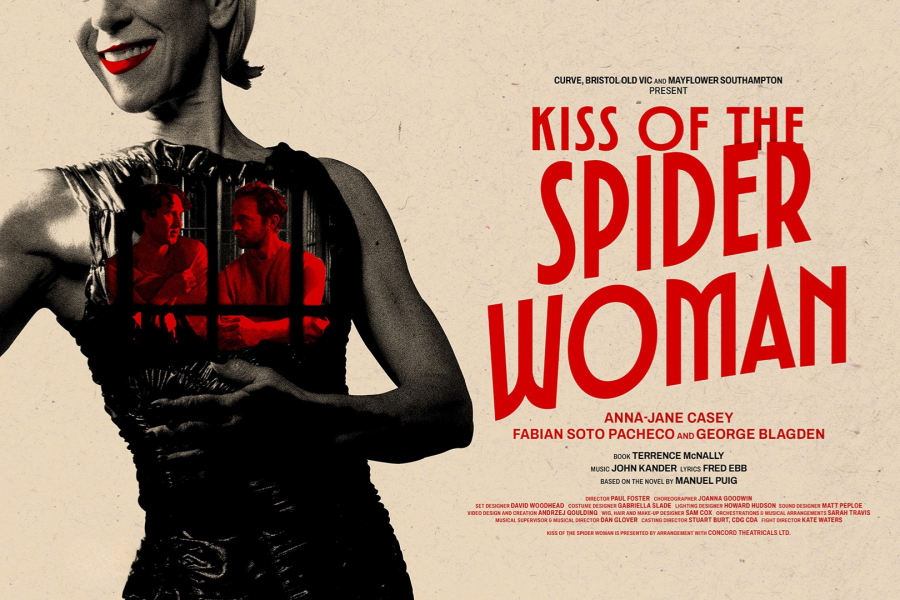
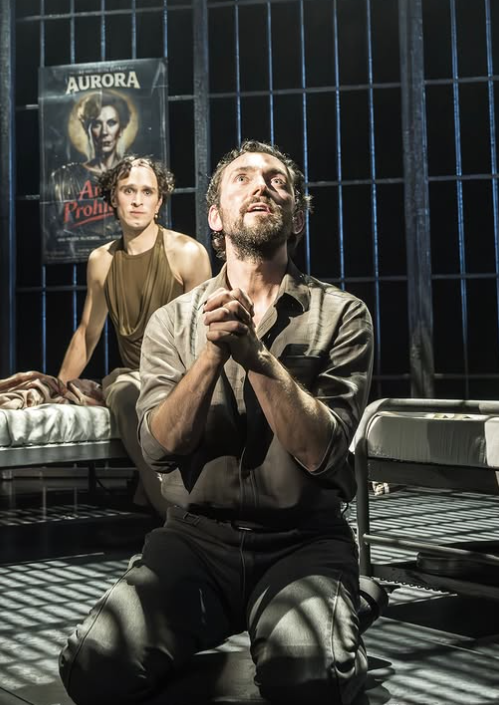
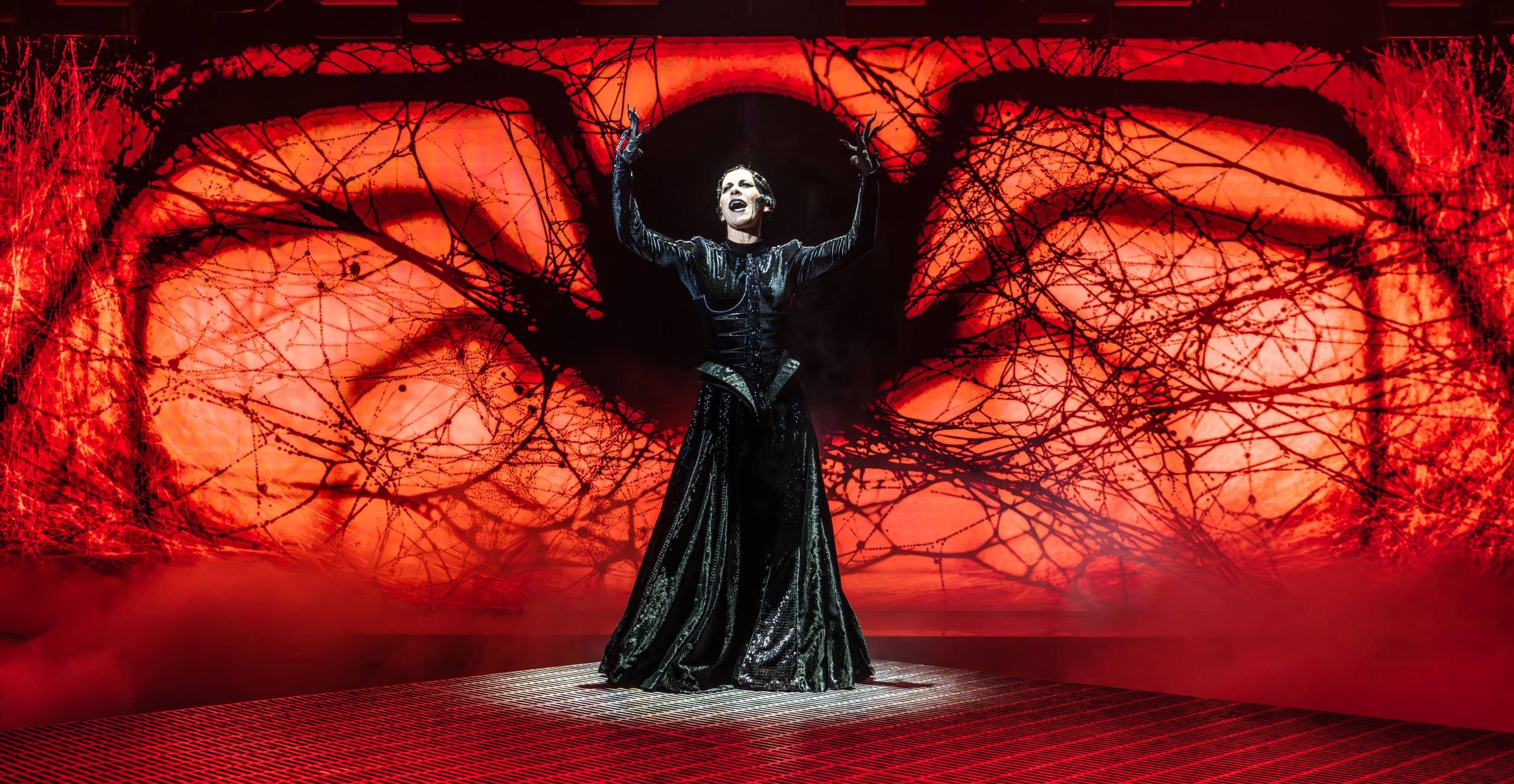
This production, directed by Paul Foster, is scaled back, but never diminished. The set is minimal – iron, shadows, suggestion – yet it creates a world that feels both claustrophobic and cinematic. The Spider Woman sequences, often playing out towards the back of the stage, are enhanced by projected film that gives them the texture of an old movie, adding a layer of glamour and escapism that contrasts beautifully with the stark reality of the prison cell. I loved how Molina and Valentín begin to inhabit those fantasy spaces together, particularly in the second half, when the emotional barriers between them begin to dissolve.

Vocally, the production is outstanding across the board. The singing is consistently strong, with real clarity and emotional weight, and it is a reminder of just how demanding this score is.

At the centre of it all is Molina, brought to life with warmth, humour and real emotional depth by Fabian Soto Pacheco. His performance is both vocally and dramatically assured, and the two elements work seamlessly together. Dressing Them Up is everything I had hoped it would be – playful, expressive and completely captivating. Having listened to Brent Carver sing that song for over three decades and knowing every word, I had high expectations and  am delighted to say that Fabian more than delivered. His rendition was rich with character and feeling, perfectly capturing Molina’s spirit.

Beyond the vocals, what makes Fabian’s Molina so affecting is his humanity. He is warm, funny, vulnerable and instinctively kind, drawing you in from the very start. Molina’s use of fantasy and storytelling as a form of escapism is central to the piece; in a bleak and oppressive environment, he creates beauty, glamour and narrative as a way of surviving. Those imagined worlds are not just distractions, but lifelines, allowing both himself and, eventually, Valentín to step outside the confines of their reality and, crucially, to find moments of light within the darkness. The chemistry between the two men simmers from the outset and deepens into something far more complex and moving as the show progresses.

What struck me most about Molina is how he is treated – dismissed, humiliated, underestimated – not just by the system around him, but initially by Valentín too. As a gay man, as someone who doesn’t fit the mould of what society values, he is seen as lesser, as frivolous, as expendable. And yet he is the moral heart of the piece. He loves deeply, he cares instinctively, he is loyal, and ultimately he is brave. It’s a powerful reminder that decency, kindness and humanity are what define a person, not how the world labels them. In a story filled with oppression and control, Molina becomes the quiet voice of compassion and, in many ways, the source of hope.

Alongside him, George Blagden is excellent as Valentin, embodying the revolutionary at the heart of the piece. His initial rigidity and emotional guard are held firmly in place, shaped by a life defined by resistance and the need to stand against oppression. What is so compelling is how gradually that armour begins to fracture. Nothing is rushed; instead, we see a man who has trained himself to suppress feeling in the name of a greater cause, slowly confronting the cost of that choice. In a world that still grapples with injustice, conflict and the silencing of dissenting voices, Valentín’s struggle feels strikingly current. His journey becomes not just personal, but political, a reminder of the courage it takes to stand up, and the humanity that can be lost along the way, but also what can be rediscovered.

Joanna Goodwin’s choreography is slick, sensual and at times deliberately provocative; yes, there is definite eye candy (the sexy, oiled prisoners did not go unnoticed 😉) – but it never feels gratuitous. Instead, it adds to the heightened, cinematic texture of the piece. Even in a scaled-down production, there’s a sense of glamour threaded throughout, like a flickering old movie playing against the harshness of the prison.

Then there is the musical number Marta. A moment I knew was coming, and yet it still broke me. It’s such a beautiful melody, sung here with real passion and sadness, and it becomes the emotional tipping point of the piece. Up until then, George’s Valentín is controlled, ideological, holding everything in. In that moment, he lets go and the result is devastating.

Anna-Jane Casey is truly mesmerising as the Spider Woman. Her physicality is extraordinary – at times almost fittingly insect-like – and when she appears in black, she is completely transformed, elegant, dangerous, and utterly compelling. She brings a seductive, otherworldly presence that anchors the fantasy sequences and elevates them into something truly striking.

What struck me most, though, is how relevant the piece still feels. The themes of oppression, poverty, and political struggle are not relics of the past; they are very much present in today’s world. And at its heart, this is not only a story about resistance, but about hope, about the ability to find light in the most difficult and horrific circumstances. It is a story about love in all its forms: romantic, sexual, maternal, ideological, and forbidden. Even in its darkest moments, it reminds us that humanity, connection and imagination can offer a way through.

One line lingered with me long after the curtain fell: “Sometimes I hate feelings.” 

And perhaps that is the essence of the show. Valentín tries to suppress them. Molina lives through them. And somewhere between the two, something deeply human emerges.

This production proves that you don’t need scale to create impact. Stripped back but emotionally expansive, it delivers a powerful, moving, and deeply resonant piece of theatre.

The hope is that this tour will evolve; don’t fail to see it if it does.

UTS Rating: 🎭🎭🎭🎭🎭


#kissofhespiderwoman #bristololdvic #kanderandebb #musicaltheatre

Kiss of the Spider Woman continues its run at Bristol Old Vic until 16th May 2026 and then plays at the Mayflower Southampton 2 – 6 June 2026.

Tickets for Bristol Old Vic are available here: Kiss of the Spider Woman | Bristol Old Vic

Tickets for Southampton Mayflower are available here: Kiss of the Spider Woman | Mayflower Studios

Photographs by Marc Brenner

Powered by WordPress & Theme by Anders Norén