
Month: August 2026

Bury the Hatchet @ Southwark Playhouse – August 2026

More than 130 years after the brutal murders of Andrew and Abby Borden shocked America, the question still lingers: did Lizzie Borden really kill her father and stepmother with an axe, or was she the victim of one of history’s most enduring rushes to judgement?

Out Of The Forest Theatre’s Bury the Hatchet revisits the infamous 1892 case, but this is no dry historical retelling. Blending true crime, courtroom drama, folk music, comedy and audience participation, writer Sasha Wilson and director Vicky Moran have created a slick, inventive and hugely entertaining 70-minute piece that manages to feel both educational and thoroughly modern.

One of the production’s greatest strengths is the sheer amount it packs into its running time. The story explores the murders themselves, the investigation, Victorian attitudes towards women, developments in forensic science and the media frenzy surrounding the trial, all without ever feeling rushed or overloaded. The pace rarely slackens, and the show constantly finds new ways to engage its audience. Remarkably, despite cramming so much into just 70 minutes, it is never boring.

The production rests in the capable hands of three exceptional actor-musicians: Sasha Wilson, Lawrence Boothman and David Leopold. All three switch effortlessly between acting, singing and playing instruments, bringing energy, humour and versatility to the storytelling. There is not a weak link among them, although Wilson brings an extra dash of panache to proceedings, delivering her own material with obvious confidence and flair.

Music proves one of the evening’s highlights. Familiar songs including Wicked Game, Feelin’ Good and Ain’t No Grave are woven seamlessly into the narrative, while the cast’s musicianship adds texture and momentum throughout. The performances are uniformly strong, with some particularly impressive vocal work.

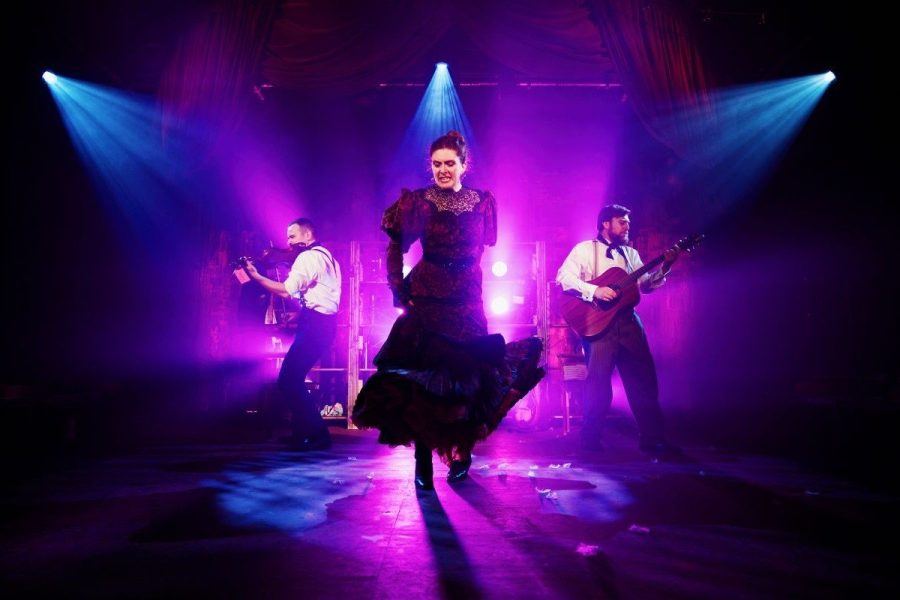
The production is also visually striking. Damien Stanton’s minimalist set, combined with Helen Stewart’s costumes and Will Alder’s lighting, creates a distinctive Victorian world dominated by a bold red-and-black palette. The blood-red and black floor is especially effective, while cleverly labelled props and costume pieces add a playful theatricality that perfectly complements the show’s blend of history, humour and performance. Stewart’s black-and-red Victorian costume for Lizzie is particularly memorable, capturing both the period setting and the production’s mischievous, heightened theatrical style. Rather than striving for strict realism, the production embraces storytelling and imagination, resulting in several memorable moments of inventive physical theatre.

Humour is another key ingredient. Despite dealing with a double murder, the show is frequently laugh-out-loud funny. The three performers throw themselves into proceedings with infectious energy. Lawrence Boothman, in particular, embraces the show’s physical comedy with gusto. At one point he commits so wholeheartedly to a comic sequence that I spent a few seconds genuinely concerned he might be sick on my foot! Fortunately for my shoes, and the rest of the audience, he wasn’t. And David….the bonnets are absolutely you! The comedy never undermines the darker elements of the story, however, and instead serves to make the historical material more accessible.

Perhaps the production’s cleverest device comes at the end, when the audience is invited to deliver its own verdict on the way out of the theatre. More than a century after the real trial ended in acquittal, opinion in the room remained divided, a testament to how effectively the show presents competing interpretations of the evidence. The truth remains elusive, and Bury the Hatchet wisely resists the temptation to offer easy answers.

Slick, clever and packed with invention, Bury the Hatchet demonstrates how fresh and engaging historical theatre can be. By combining true crime, music and playful theatricality, Out Of The Forest Theatre have transformed a familiar story into an evening that is as thought-provoking as it is entertaining. It is a production that wears its considerable intelligence lightly and leaves audiences with plenty to discuss long after the final verdict has been delivered.

UTS Rating: 🎭🎭🎭🎭

#BuryTheHatchet #SouthwarkPlayhouse #LondonTheatre #TheatreReview #UnderTheStarsByGirloutside #lizzieborden

TAPE @ Lion and Unicorn Theatre (Camden Fringe) – August 2026

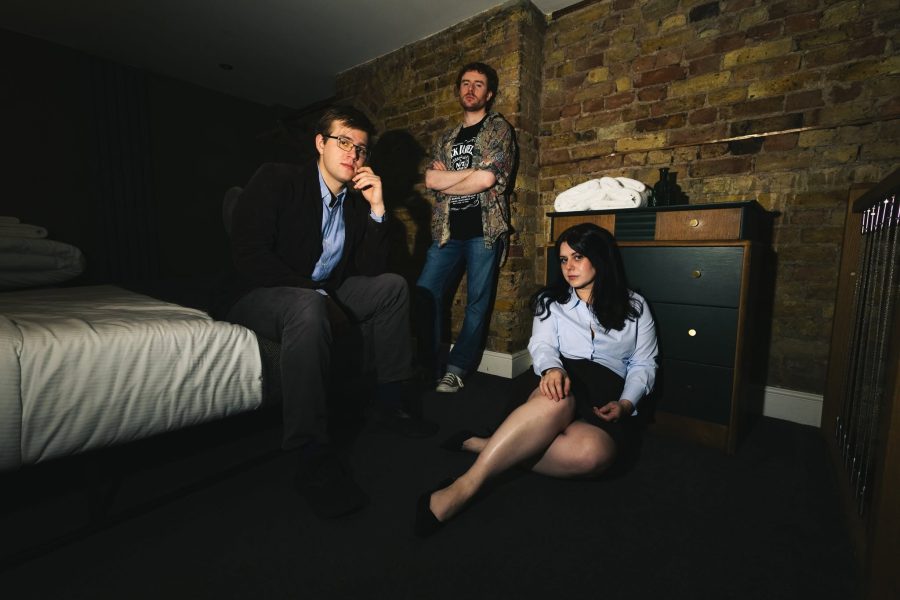
A motel room. Two old friends. A cassette recorder. And a conversation about the past that gradually becomes something altogether more uncomfortable.

Stephen Belber’s Tape is a deceptively simple three-hander, and Cellar Door Theatre brings its claustrophobic world to the intimate Lion & Unicorn Theatre as part of this year’s Camden Fringe. At just 52 minutes, it’s a compact production built around fast-paced dialogue, shifting recollections and a question that becomes increasingly difficult to avoid: when two people remember the same encounter very differently, where does the truth lie?

First performed in 1999, Tape centres on Vince and Jon, old high-school friends reunited ten years later. What initially appears to be an awkward catch-up gradually becomes an interrogation about an encounter from their past involving Amy, a former girlfriend of Vince’s.

Vince remembers the encounter as rape. Jon remembers it very differently.

Cellar Door Theatre’s production certainly commits to that pressure-cooker atmosphere. Paul Kelvin as Vince and Nick Chinn as Jon establish an immediately combative relationship, their exchanges delivered at a rapid-fire pace as the balance of power between the two continually shifts. Both give committed, energetic performances and handle the considerable amount of dialogue impressively. There is a convincing sense of history between them too, although I did feel that the initial exchanges between them went on for rather too long before the real purpose of their reunion became apparent. More significantly, Vince’s motivation for pursuing Jon so relentlessly never felt entirely clear to me. That’s less a criticism of Kelvin’s performance than of the material itself: the production gives us the intensity, but the text doesn’t always provide enough psychological depth beneath it.

The arrival of the subject of the duel changes the dynamic again, turning what has essentially been a two-handed verbal confrontation into something more complicated. Brittany Rex’s Amy brings a different energy to the room as the person whose experience has until then existed only through the recollections and interpretations of two men. Amy also has considerably less time in which to establish herself than Vince and Jon, arriving relatively late in such a short play, which inevitably leaves the character with less room to develop. Her presence nevertheless destabilises everything we think we have understood.

And this is where Tape should perhaps become most fascinating. Its themes of consent, memory, sexual assault and the different ways in which people can interpret the same event remain every bit as relevant now as when Belber wrote the play. Yet, for me, the writing never quite explores those ideas with the complexity they deserve.

That was ultimately my difficulty with the evening. I admired the commitment of the company considerably more than I admired the play itself. The premise is provocative, but the writing sometimes feels more interested in engineering confrontation and bullying than genuinely interrogating the questions it raises. Most problematically, I never found myself sufficiently invested in these characters, or ultimately caring very much about what had happened between them. Given the seriousness of the subject matter, that emotional distance felt significant. Again, this wasn’t for want of commitment from the performers; for me, the writing simply never gave the characters enough depth to make their predicament truly involving. Given how much our conversations around consent have developed since Tape was first performed, I was left wondering what this particular play adds to that conversation today.

There are, however, some very effective production choices. The cassette recorder at the heart of proceedings is a wonderfully tangible reminder of the era in which the play was written, and there’s something rather pleasing now about seeing a good old cassette being used on stage.

I particularly enjoyed the music choices, which gave the production a strong late-90s alternative-rock texture. Alice in Chains’ ‘Man in the Box’, Mötley Crüe’s ‘Bastard’, Tears for Fears’ The Hurting’ and Butthole Surfers’ wonderfully distinctive ‘Pepper’ all worked extremely well with the atmosphere of the piece. The latter prompted one of those satisfying moments of half-recognition where I spent ages convinced I could hear Beck before discovering what it actually was.

Director Jaimee Doyle, assisted by Donovan Lenten, keeps the action moving briskly and makes good use of the Lion & Unicorn’s intimate performance space. There’s nowhere for these characters to hide, either from each other or from an audience sitting only feet away, and that proximity suits a play entirely dependent upon discomfort and confrontation.

Most importantly, this was clearly a production that connected strongly with its audience. The performance I attended was full and warmly received, culminating in a standing ovation. Theatre is subjective, and while Tape itself didn’t resonate particularly strongly with me, there were clearly plenty in the room for whom it did.

Cellar Door Theatre have approached a difficult piece with conviction, created an appropriately tense and claustrophobic environment and assembled a cast willing to throw themselves fully into some challenging material. While I remain unconvinced by Belber’s play, there was plenty here to suggest a company with interesting instincts and a willingness to tackle uncomfortable subjects.

For me, then, a stronger production than the play it serves, and an interesting contribution to the Camden Fringe.

UTS Rating: 🎭🎭🎭

Jesus Christ Superstar @ London Palladium – July 2026

There are few experiences in theatre quite like standing on the stage of the London Palladium.

Having spent years sitting in its auditorium watching everyone from major musical theatre stars to legendary bands, stepping onto the very stage where so many iconic performers have stood felt special before Jesus Christ Superstar had even begun. Add to that the opportunity to see behind the scenes of one of London’s most famous theatres, and it became far more than simply another visit to a musical.

This was my second encounter with Timothy Sheader’s acclaimed Regent’s Park Open Air Theatre production, now transferred to the Palladium. While I was already familiar with the staging, watching it from one of the on-stage platforms offered an entirely different perspective. Thanks largely to luck in the queue, I found myself right at the front for both acts with an uninterrupted view of the action.

That different perspective inevitably comes with compromises. You lose some of the sweeping visual impact of the staging, the carefully composed lighting and the performers’ facial expressions as they sing out towards the auditorium. Yet what you gain is something impossible to recreate from a theatre seat. Rather than observing events from afar, you become part of them, standing like one of the silent bystanders witnessing the final days of Jesus unfold around you.

One of the unexpected joys was turning away from the action and looking out into the Palladium itself. Instead of staring towards the stage, I found myself gazing across the stalls, dress circle and upper circle, imagining the countless performers who have looked out at exactly that view over the decades. Throughout the evening I could also watch the audience’s reactions. Faces shifted between delight, awe and sadness, while one gentleman in the front row remained utterly captivated, visibly moved during the Crucifixion. It was a fascinating reminder of theatre’s unique ability to create a shared emotional experience.

The production itself remains as striking as ever. The industrial scaffolding set is deliberately sparse, allowing Andrew Lloyd Webber’s extraordinary score and Tim Rice’s lyrics to take centre stage, while the towering illuminated cross gradually becomes an unforgettable visual centrepiece.

Being so close to the performers also gave me a renewed appreciation for the ensemble. Having recently performed in the ensemble of Kinky Boots myself, I know they are the beating heart and engine room of any musical, and nowhere was that more apparent than here. Rarely leaving the stage, they sing, dance, act and drive the story forward with astonishing stamina. Standing just a few feet away, I could hear individual voices within the harmonies, see the precision of every movement and even hear performers catching their breath between phrases. It offered a fascinating glimpse into just how physically and vocally demanding musical theatre really is. The diverse company performed with remarkable commitment throughout, each individual contributing to a cohesive whole.

Sam Ryder proves an inspired choice as Jesus. His vocal ability is nothing short of extraordinary, delivering Andrew Lloyd Webber’s demanding score with remarkable ease, warmth and emotional conviction. His interpretation of Gethsemane, one of my favourite songs in musical theatre and one I have performed myself, was outstanding. While echoes of Ted Neeley’s iconic portrayal can be heard, Ryder brings his own humanity and vulnerability to the role, making it entirely his own.

David Thaxton, a performer I have admired ever since seeing him as Enjolras in Les Misérables, delivers a commanding and intimidating Pilate. His chilling delivery during the sequence leading to the thirty-nine lashes is genuinely unsettling, while seeing the character up close only heightened his imposing presence.

Opposite him, Tyrone Huntley brings immense energy and complexity to Judas. Possessing one of the finest voices in the company, his performance balances anger, doubt and desperation, creating a Judas whose inner conflict remains compelling throughout.

Richard Armitage may seem an unexpected choice for Herod, but he throws himself wholeheartedly into the role’s gloriously camp absurdity. Herod’s Song has never been my favourite number in the score, yet Armitage embraces every glittering, theatrical moment with infectious enthusiasm.

Desmonda Cathabel is a wonderful Mary Magdalene. Her rendition of I Don’t Know How to Love Him was one of the evening’s vocal highlights, delivered with warmth, clarity and effortless control. It is a song I know and love well, and I particularly appreciated the beautifully traditional orchestral arrangement, which remains faithful to the classic recordings that first made the number famous.

Some of my favourite moments, however, were the ones almost nobody else in the theatre could see. At one point, Cathabel found herself standing just feet away from our platform, playfully acknowledging us as she gestured towards Jesus, creating a fleeting but memorable connection. Later, during a scene in which members of the company lay hidden behind the cross, invisible to the audience, I noticed her quietly holding the hand of one of the younger ensemble members. It was a simple act of kindness that perfectly captured the warmth and camaraderie within this company.

The entire on-stage experience was impeccably organised. From arrival to departure, the staff were warm, friendly and reassuring, ensuring everything ran smoothly, including the temporary locking away of mobile phones. Although I had experienced being on a West End stage before, this felt every bit as special.

The evening concluded with one final surprise. After taking their bows and applauding the orchestra, the company turned towards those of us standing on the stage and applauded us in return. It was a small gesture, but one that perfectly summed up the generosity of spirit that had characterised the entire experience.

Standing on the stage of the London Palladium doesn’t offer the definitive way to experience Jesus Christ Superstar, nor should it. Instead, it provides a unique and deeply immersive perspective on one of musical theatre’s greatest works. I left with an even greater appreciation for the extraordinary talent required to bring this iconic rock opera to life and, perhaps most importantly, already planning a return visit from the auditorium to admire it all over again from a completely different angle.

UTS Rating: 🎭🎭🎭🎭🎭

#jesuschristsuperstar #london palladium #samryder #andrewlloydwebber

Powered by WordPress & Theme by Anders Norén