

Month: November 2026

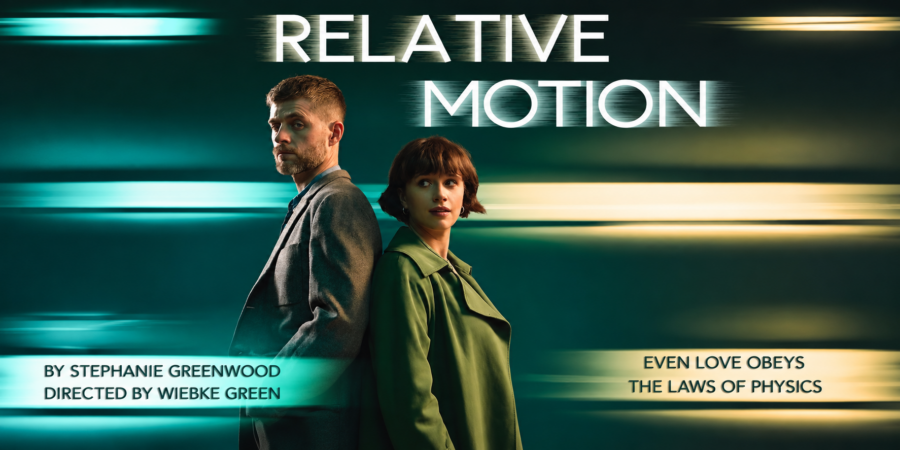
Relative Motion @ Southwark Playhouse Borough – November 2026

Southwark Playhouse Borough | 17 November 2026

UTS Rating: 🎭🎭🎭🎭 (4/5)

There are some plays that entertain you, some that make you think, and others that leave you feeling distinctly uncomfortable. Relative Motion, Stephanie Greenwood’s compelling new play at Southwark Playhouse Borough, falls firmly into the latter category. Not because it is particularly shocking or sensational, but because it is so frighteningly believable.

Sam (Stephanie Greenwood) is an intelligent, ambitious young physicist with a promising career ahead of her. Paul (Sean Hart) is a dishevelled, charming, artistic writer. They meet on a train platform, and there is an immediate attraction. He is funny, engaging and apparently thoughtful. She is bright, enthusiastic and full of life. What could possibly go wrong?!

Quite a lot, as it turns out.

Their relationship develops quickly. Paul declares his love almost immediately, and before long they are making plans for a future together. But the warning signs are there from the very beginning. Even during a very early encounter, he questions why Sam wants to leave him to catch her train rather than spend another three minutes in his company. It seems almost playful at first, but it is an early glimpse of the possessiveness that will come to dominate their relationship.

As the story unfolds, Paul’s behaviour becomes increasingly troubling. He accuses Sam of flirting with his friends when she is simply being friendly, questions her commitment to him and finds fault with seemingly innocent remarks. When she apologises, often repeatedly, he withdraws his affection, ignores her calls and messages, and leaves her wondering what she has done wrong.

And then, just when we are ready to write him off completely, he becomes the lovely, supportive, understanding man she fell in love with.

It is this constant switching between affection and cruelty that makes Paul’s character so convincing, and so unsettling. His behaviour is not always overtly aggressive. Sometimes it is subtle, almost imperceptible, leaving Sam questioning her own judgement and apologising for things that were never her fault in the first place.

Meanwhile, Sam has rather more important things to contend with. She is grieving the death of her mother, facing challenges surrounding her own health and future, and trying to pursue her academic ambitions. Yet, somehow, she finds herself devoting an extraordinary amount of emotional energy to managing Paul’s moods and insecurities. Even the day of her mother’s funeral becomes the occasion for another confrontation.

Greenwood’s writing captures the insidious nature of coercive control with remarkable authenticity. As the gentleman sitting next to me observed afterwards, “It’s that drip, drip, isn’t it?” And he was absolutely right. It is the accumulation of seemingly minor incidents, the constant questioning, the misplaced guilt, the apologies for things that were never her fault, that gradually erodes Sam’s confidence. No single incident necessarily seems catastrophic in isolation, but together they create something deeply damaging.

This is not a simplistic portrait of a villain and his victim. Paul can be genuinely appealing, and Sam is certainly no shrinking violet. She is successful, articulate, independent and intelligent. But none of those qualities makes someone immune to emotional manipulation.
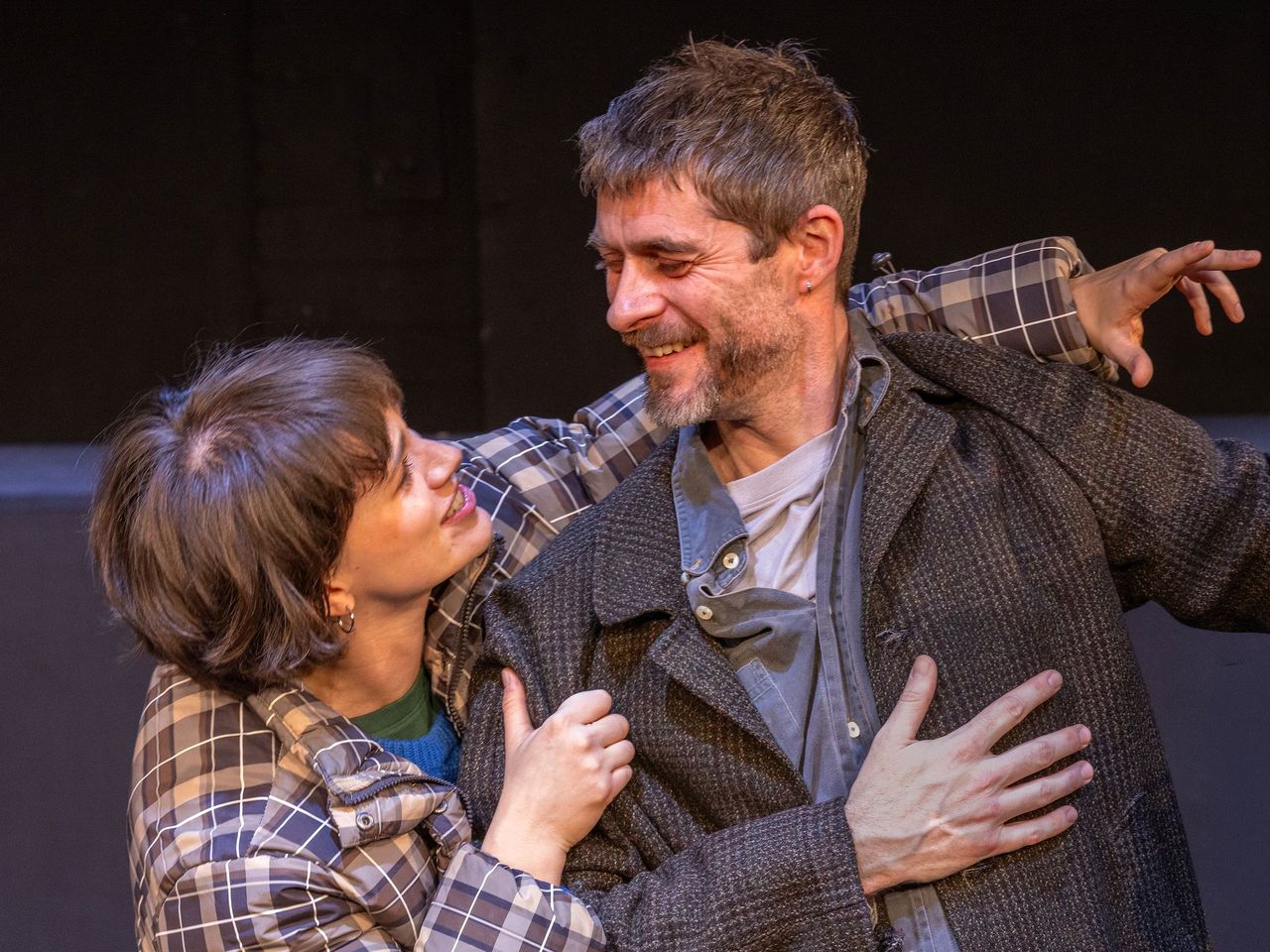
Indeed, that is perhaps the most powerful aspect of the play. For anyone who has encountered this kind of relationship, whether personally or through someone close to them, there will be moments of uncomfortable recognition. I suspect that many in the audience felt the same. By about half an hour in, I think most of us wanted to throttle Paul ourselves.

Sean Hart is excellent as Paul, making him infuriatingly believable without ever turning him into a caricature. His charm is entirely credible, which is essential if we are to understand why Sam falls for him and, more importantly, why she stays. His ability to shift almost instantaneously from warmth and vulnerability to jealousy and coldness is particularly impressive.

Greenwood is equally compelling as Sam. She portrays a woman who begins the relationship confident and full of optimism, but gradually finds herself second-guessing her own behaviour. Her performance is beautifully natural, and the frustration of watching such a capable woman become increasingly entangled in Paul’s emotional games is almost unbearable.

Together, the two actors create an absorbing and often painfully recognisable relationship. One particularly impressive sequence sees Sam travelling home on a train, speaking to her sister on the phone, while Paul, on the other side of the stage, desperately tries to contact her. Having previously subjected Sam to days of silence, he now finds himself on the receiving end. The rapid exchanges are brilliantly written and impeccably timed, requiring considerable precision from both performers. It’s a wonderfully effective piece of theatrical storytelling.

Directed by Wiebke Green, the production is strikingly minimalist. The stage is essentially a black floor with a handful of movable blocks, which are rearranged to suggest different locations. It is an effective approach, keeping our attention firmly on the characters and their changing relationship.

Physics is woven cleverly into the narrative, reflecting Sam’s profession and providing a metaphor for the forces at work between the couple. At various points, she writes equations in chalk across the blocks and stage floor, a device that reminded me of The Curious Incident of the Dog in the Night-Time. The scientific language of motion, momentum and opposing forces becomes an unexpectedly fitting way of exploring the complexities of human relationships.

At around 75 minutes without an interval, Relative Motion is tightly constructed and never loses its audience’s attention. If anything, I would have welcomed a little more time for the relationship to develop and for some of its complexities to be explored further. But there is something to be said for the intensity of a single, uninterrupted act, particularly with material as emotionally demanding as this.

The closing scenes are especially effective, offering an intriguing moment of ambiguity and a wonderfully unexpected burst of laughter from the audience. It is a clever release of tension after what has been, at times, a deeply uncomfortable experience.

Reading Greenwood’s programme notes afterwards, I was interested to discover that the play was originally conceived in 2018 and developed from her fascination with Newton’s laws of motion as a way of understanding human relationships. She describes the difficulty of finding satisfactory explanations for why people hurt one another, and the temptation to look for something more tangible in the laws of physics. It is a fascinating starting point for a play that ultimately demonstrates just how unpredictable human behaviour can be.

There is a nice personal connection for me, too. Feuille Dooley Productions, who are associated with this production, were also behind I Was a Teenage She Devil, the very first show I reviewed when I returned to theatre reviewing earlier this year. It is a pleasure to encounter their work again, albeit in a very different form.

Relative Motion is an intelligent, perceptive and superbly acted exploration of a relationship that becomes increasingly destructive. Its greatest strength lies in its restraint. It does not need melodrama or sensationalism to make its point. Instead, it shows how easily affection can become possession, how manipulation can masquerade as love, and how difficult it can be to recognise what is happening when you are caught in the middle of it.

Uncomfortable, compelling and all too recognisable, this is a powerful piece of theatre that deserves to be seen.

Relative Motion continues its run at Southwark Playhouse Borough until 5 December 2026, with tickets available here: Relative Motion – Southwark Playhouse Borough

Photos by Simon Annand and Rich Lakos.

Amy Wadge @ London Palladium – November 2026

Amy Wadge at the London Palladium: ‘A Dream Come True’

London Palladium | 4 November 2026

UTS Rating: 🎭🎭🎭🎭🎭 (5/5)

The London Palladium has welcomed some of the biggest names in entertainment over its illustrious history, but on Wednesday 4 November 2026, the spotlight belonged to a woman more accustomed to writing hits for other people than taking centre stage herself. For Grammy Award-winning singer-songwriter Amy Wadge, headlining this iconic venue was the fulfilment of a lifelong dream. And judging by the warmth, affection and enthusiasm of the audience, it was a dream that plenty of people were delighted to share.

Amy’s extraordinary songwriting career has seen her collaborate with some of the biggest names in music, but this was an evening devoted to her own voice, her own stories and the remarkable catalogue of songs she has helped create. It was also an opportunity to discover the wonderfully warm, funny and deeply human woman behind the music.

Originally from Bristol, Amy moved to Wales to study at the Royal Welsh College of Music and Drama, subsequently building a successful career as a singer-songwriter before becoming one of the industry’s most sought-after collaborators. Her songwriting credits read like a who’s who of popular music, including Ed Sheeran, Kylie Minogue, James Blunt, Keith Urban and many more. Her work regularly takes her across the Atlantic, but Wales remains home, and her affection for her family and the people who have supported her throughout her career is never far from the surface.

I first discovered Amy through Faith’s Song, the beautiful, haunting theme to the television drama Keeping Faith. Her distinctive, slightly husky voice and emotionally intelligent songwriting immediately struck a chord with me. I subsequently saw her perform at London’s Union Chapel a couple of years ago, an intimate and memorable evening that only strengthened my admiration. So, when her Palladium concert was announced, I wasted no time in booking a ticket, securing a seat right in the middle of the front row of the Royal Circle.

Despite the grandeur of the venue, there was nothing remotely showy about the production. Accompanied by a small, exceptionally talented band, Amy allowed the songs, and the stories behind them, to do the talking. The arrangements were beautifully understated, giving her distinctive vocals and thoughtful lyrics room to breathe. It was a reminder that great music doesn’t need elaborate staging or theatrical effects to make an impact.

And Amy is a wonderful storyteller.

Naturally funny, self-deprecating and refreshingly unfiltered, she has an effortless ability to make an audience laugh without appearing to try. Her anecdotes about the music industry, her collaborations and the often chaotic realities of balancing work and family life were fascinating and frequently hilarious. There is something wonderfully endearing about her complete lack of pretension. Despite her extraordinary achievements, she comes across as someone you could happily spend an evening chatting to over a glass of wine.

Among the evening’s highlights was Thinking Out Loud, the global hit she co-wrote with Ed Sheeran, which earned them the Grammy Award for Song of the Year in 2016. Amy has known Ed since he was just seventeen, and it was lovely to hear her speak so affectionately about their longstanding friendship. She was particularly keen to emphasise his kindness and the love she believes lies at the heart of everything he does. Hearing her perform the song with her own band was a real treat, bringing a fresh intimacy to a composition that has become familiar to millions.

Another standout was Space Man, co-written by Amy and performed by Sam Ryder at the 2022 Eurovision Song Contest, where it secured the United Kingdom an impressive second place. Stripped of its Eurovision spectacle and accompanied by the superb Zak Lloyd on piano, the song took on an entirely different character. It was a stunning performance, demonstrating both the strength of the original songwriting and Amy’s ability to breathe new life into something so widely recognised.

But it was the more personal material that affected me most profoundly.

Amy lost her mother around three years ago, and that experience has understandably found its way into her songwriting. When Did You Get Old?, a tender reflection on the changing relationship between a mother and daughter, was particularly moving. I lost my own mum nearly three years ago, and listening to Amy sing about that relationship brought so many emotions to the surface.

There is something about her writing that captures feelings we often struggle to articulate ourselves. She doesn’t overcomplicate them or dress them up unnecessarily. She simply finds the words, and somehow they are exactly the right ones.

I spent a considerable part of the evening in tears, although there was plenty of laughter too. That ability to move so naturally between humour and heartbreak is one of Amy’s greatest strengths, both as a songwriter and a performer.

There is another rather lovely personal coincidence. Amy and I were born on exactly the same day, and although we have never met, I have long felt a particular affinity with her. Perhaps it is our shared experiences, perhaps it is simply the honesty of her music, but there are few artists whose songs speak to me quite so directly.

Hearing Faith’s Song performed with nothing more than Amy’s voice and guitar was another unforgettable moment. It was the song that first introduced me to her music, and hearing it in such a beautifully simple arrangement, on a stage as prestigious as the Palladium, felt like coming full circle.

The evening also held another unexpected personal connection.

Throughout the evening, Amy repeatedly expressed her gratitude to everyone who had come to support her. She acknowledged those who had travelled from Wales and other parts of the country, recognising that attending a concert often involves considerable effort, expense and, for parents, the logistical challenge of arranging childcare. None of that, she made clear, was lost on her.

She also paid affectionate tribute to her husband, children and friends, many of whom were there to share in this important milestone. There was a genuine sense that this was not simply another date in a touring schedule, but an occasion of enormous personal significance.

Among the friends and family Amy acknowledged from the stage was Michael Ball, with whom she has written and toured extensively. Michael was sitting in the stalls with Cathy, and although I didn’t spot him until I was leaving, his presence made the evening particularly special for me. I have been a fan of Michael’s since I was sixteen, and back in 1992 my mum and I watched him perform for the first time at the London Palladium from the Royal Circle. Thirty-four years later, I found myself sitting in that very same part of the theatre, watching another artist whose music has come to mean so much to me, with Michael himself in the audience below. It was a poignant and rather wonderful coincidence.

At one point, Amy suggested that she might never perform another concert quite like this one. Whether that proves to be the case remains to be seen, but I sincerely hope there will be many more opportunities to experience her extraordinary talent live.

What made the evening so memorable was not simply the quality of the songs, impressive though they were, or the calibre of the musicianship. It was Amy herself. Her warmth, humour, vulnerability and complete authenticity created an atmosphere that felt remarkably intimate, even within one of London’s most celebrated theatres.

As the concert drew to a close, a visibly emotional Amy thanked everyone for coming and for “making my dream come true.”

For someone who has spent so much of her career helping other artists realise their musical ambitions, it felt particularly fitting that this night belonged entirely to her.

And what a privilege it was to be there.

Powered by WordPress & Theme by Anders Norén